Advertisement · Educational Presentation

The Quiet Kitchen Ritual: What a Spoonful of Honey Reveals About the Aging Mind

Long before supplements crowded pharmacy shelves, households kept a jar of honey on the counter — not as medicine, but as part of a daily rhythm many people over 50 still recognize. This presentation explores why that small habit has quietly outlasted trends, and what current thinking about memory and aging has to say about it.

Memory & Aging  ·  Kitchen Traditions  ·  Cognitive Wellness After 50  ·  Everyday Rituals, Reexamined

Why Memory Shifts After 50

It rarely announces itself. It shows up in small, ordinary moments — the kind that pass unnoticed until they start to repeat.

The Jar on the Counter

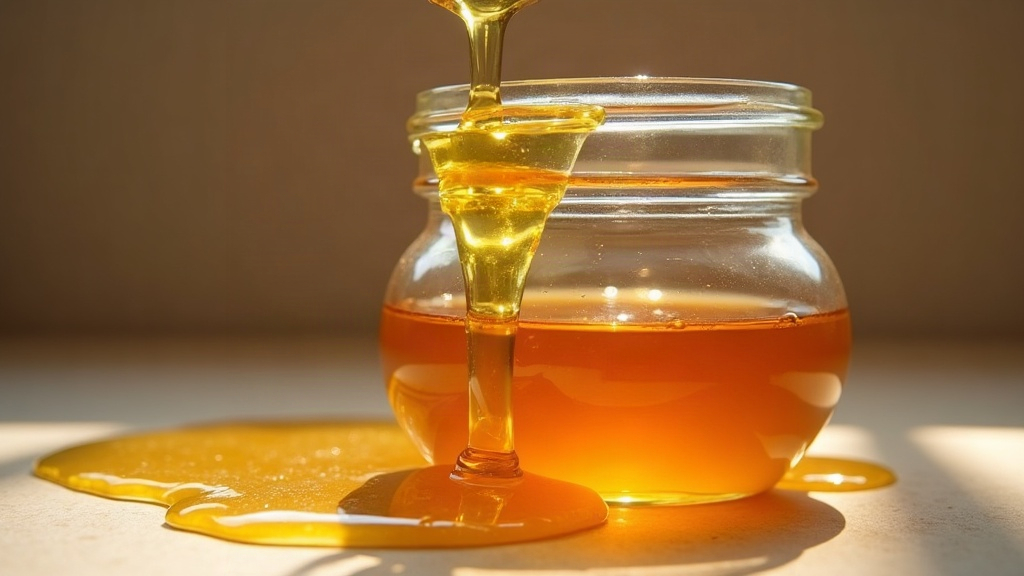
She reached for the honey the way she had every morning for thirty years, then paused mid-motion, unable to recall the word for the tea she was about to pour it into. The gesture was automatic. The word was not.

Time Feels Different

Minutes stretch or vanish. A task that once took ten minutes now takes twenty, not because the hands move slower, but because attention has to be gathered before it can be spent.

Sleep Patterns Rearrange

Deep sleep becomes shorter and lighter with age, and since memory consolidation leans heavily on those hours, the mornings after restless nights often feel foggier than they used to.

The Brain's Slow Recalibration

Processing speed declines gradually after midlife, a well-documented pattern in cognitive aging research. It is not a malfunction. It is a recalibration most people go through, at different speeds, in different ways.

Myths vs. Facts About Aging and Memory

Kitchen wisdom and clinical caution rarely agree at first glance. Here is where the line actually falls.

MYTH

Forgetting where you put your keys means serious decline has begun.

FACT

Occasional lapses in situational memory are common at every age and, on their own, are not considered a diagnostic sign of cognitive disorder.

MYTH

Only pills and supplements are worth paying attention to for brain aging.

FACT

Researchers studying cognitive aging consistently point to sleep, diet, movement, and daily habits as the areas most within a person’s control.

MYTH

Honey is just sugar and has no place in a conversation about the brain.

FACT

Honey’s composition — antioxidant compounds alongside natural sugars — is why food scientists have studied it for decades, though findings on cognition remain preliminary and food is not a substitute for medical care.

A Simple Way to Approach the Question

No single ritual fixes what aging naturally does to the brain. But a structured way of paying attention tends to reveal more than guesswork.

01

Observe the Everyday Rhythm

Before changing anything, notice what already happens: sleep timing, meals, the moments when focus feels sharp versus scattered. Patterns rarely show themselves in a single day.

02

Introduce Small, Consistent Habits

Whether it is a morning routine involving honey and tea, a short walk, or a fixed bedtime, consistency tends to matter more than intensity when habits are meant to last for years, not weeks.

03

Track Patterns Over Weeks, Not Days

Cognitive changes, when they happen at all, unfold slowly. A simple notebook or app tracking sleep, mood, and memory moments over a month reveals far more than a single week of attention.

Where This Idea Actually Comes From

Honey shows up in the historical record long before modern nutrition science existed — in Egyptian medical papyri, in Ayurvedic texts, in the cupboards of grandmothers across continents who had no access to laboratories but plenty of observed experience. What kept it there wasn’t proof in the clinical sense; it was a food that stored well, tasted good, and fit into daily rituals people already trusted. Modern food science has since catalogued honey’s antioxidant and antimicrobial properties, and some researchers have examined its potential relevance to oxidative stress — one of many processes studied in brain aging. None of this amounts to a treatment. It amounts to a reason the tradition never quite disappeared.

The interesting part isn’t that honey is a miracle food — it isn’t. It’s that a habit this old survived without marketing, without a study behind it at the time, simply because it fit into how people already lived.

Signs Worth Paying Attention To

Misplacing Common Words

Substituting a vague word for a specific one — calling a spoon 'the stirring thing' — more often than feels usual for you.

Losing Track of Conversations

Struggling to follow a discussion with several people, or realizing you've asked the same question twice within a short span.

Difficulty Following Familiar Recipes

A recipe made hundreds of times suddenly requiring the instructions to be reread step by step.

Repeating Questions

Asking something that was already answered minutes earlier, without recalling the exchange took place.

Trouble With Familiar Routes

Feeling briefly disoriented on a walk or drive that has been taken hundreds of times before.

Struggling With Multi-Step Tasks

Losing the thread partway through a task that involves several sequential steps, like assembling something or following a form.

What People Say After Watching

I didn't expect a video about honey to make me think this much about my own habits. It didn't give me answers, but it gave me better questions to ask my doctor.

Marguerite D., 63
Illustrative account
The part about tracking patterns over weeks instead of days stuck with me. I'd been panicking over single bad days for no reason.
Walter H., 58
Illustrative account
It's rare to find something on this topic that doesn't try to sell you a miracle. This felt more like a conversation than a pitch.
Rosalind K., 67
Illustrative account

Testimonials reflect individual opinions and experiences. They are not a guarantee of any outcome, and results — including impressions of the content itself — vary from person to person.

Frequently Asked Questions

No. The presentation discusses historical use of honey and general research on cognitive aging. It does not claim honey treats, prevents, or cures any condition.

No. Nothing in this content is medical advice. Any concerns about memory or cognitive changes should be discussed with a licensed healthcare professional.

Cognitive aging patterns, sleep changes, and habit formation research most commonly reference this age range, which is why the content is framed around it.

The presentation discusses honey as a topic of historical and nutritional interest. It is not a product listing or a treatment recommendation.

It’s designed to be watched in one sitting, at a pace intended to be easy to follow for viewers of any age.

That’s common. The signs listed are general points of awareness, not a checklist that applies uniformly to everyone.

The presentation references publicly available research on cognitive aging and food science. Viewers are encouraged to consult their healthcare provider for guidance specific to their situation.

Curious What the Full Presentation Covers?

It walks through the history, the research context, and the everyday reasoning behind a habit that has quietly persisted for generations — without promising anything it can’t back up.

Advertising Disclosure: This page contains sponsored content and affiliate links. We may receive compensation if you click a link or make a purchase through the links provided. This helps support the operation of this site at no additional cost to you.

Content Disclaimer: This content is provided for educational and informational purposes only. It has not been evaluated by the FDA and is not intended to diagnose, treat, cure, or prevent any disease. Always consult a qualified healthcare professional before making changes to your health, diet, or wellness routine.

Results Disclaimer: Individual results and experiences vary. Testimonials and examples shared on this page are not a guarantee of any specific outcome, and should not be interpreted as a promise of results for any individual.

© 2026 · All Rights Reserved · /contact/